
Ayurveda, often called the science of life, is an ancient holistic system that originated in India over 5,000 years ago. At its heart, Ayurveda teaches us that balance is not one-size-fits-all. What nourishes one person may feel depleting to another—and even our own needs can change from day to day.
One of the foundational concepts of Ayurveda is the doshas: three energetic forces that influence our body, mind, and emotions. Understanding the doshas helps us make more compassionate choices around movement, rest, food, and self-care.
What Are the Doshas?
The doshas are made up of the five elements—earth, water, fire, air, and space—and are present in everyone in different proportions. Rather than being something to “fix,” the doshas offer a language for understanding our natural tendencies and current state of balance.
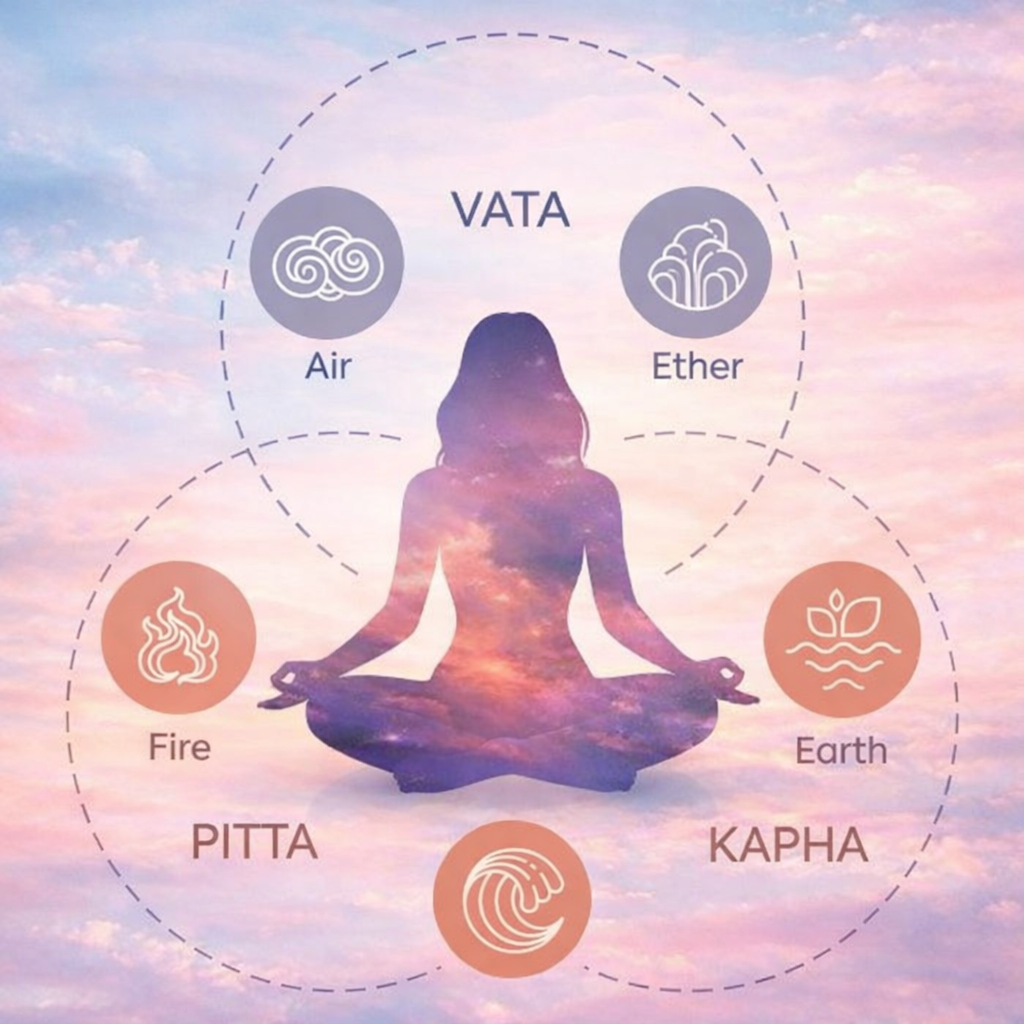
The three doshas are:
Vata (air + space)
Pitta (fire + water)
Kapha (earth + water)
We each have all three, but usually one or two are more dominant. Take the simple quiz below to find out your dosha.
Vata Dosha: Movement & Change
Elements: Air + Space
Qualities: Light, dry, cold, mobile, subtle
Vata governs movement in the body—breathing, circulation, the nervous system, and creativity. When Vata is balanced, we may feel inspired, adaptable, and lively.
When Vata is out of balance, it can show up as:
Feeling scattered or anxious
Difficulty sleeping
Dryness in the body
Fatigue or overthinking
Ayurvedic support for Vata
Vata benefits from grounding, warmth, and routine. Slow, steady yoga practices, gentle breathwork, and longer holds help calm the nervous system and create a sense of safety and stability.
Pitta Dosha: Transformation & Focus
Elements: Fire + Water
Qualities: Hot, sharp, intense, focused, transformative
Pitta governs digestion, metabolism, and mental clarity. When balanced, Pitta expresses as confidence, intelligence, and purpose.
When Pitta is out of balance, it may feel like:
Irritability or frustration
Overheating or inflammation
Perfectionism or burnout
Difficulty relaxing
Ayurvedic support for Pitta
Pitta thrives with cooling, softening, and moderation. Gentle yoga with a non-competitive mindset, calming breath, and surrendering intensity helps bring balance back to both body and mind.
Kapha Dosha: Stability & Nourishment
Elements: Earth + Water
Qualities: Heavy, slow, steady, grounded, nurturing
Kapha provides structure, strength, and emotional steadiness. When balanced, Kapha offers patience, compassion, and resilience.
When Kapha is out of balance, it can feel like:
Sluggishness or heaviness
Low motivation
Feeling stuck emotionally or physically
Resistance to change
Ayurvedic support for Kapha
Kapha benefits from movement, warmth, and gentle stimulation. Uplifting yoga practices that encourage circulation, lightness, and rhythm can help awaken energy without force.
Your Dosha Does not Define You
One of the most important teachings of Ayurveda is that you are not your dosha. Your needs change with the seasons, your stage of life, stress levels, and even the time of day.
Rather than asking:
“What is my dosha?”
Ayurveda invites us to ask:
“What do I need right now?”
This awareness allows us to meet ourselves with kindness instead of judgment.
Yoga as a Tool for Balance
Yoga and Ayurveda are sister sciences. When we understand the qualities of the doshas, yoga becomes a powerful tool for restoring balance:
Grounding practices soothe excess Vata
Cooling, gentle flows calm Pitta
Energizing, rhythmic movement supports Kapha
Ayurveda teaches us to live in relationship with ourselves—to listen, respond, and adapt. By understanding the doshas, we gain permission to honor our energy instead of pushing against it.
Whether through yoga, breath, rest, or daily rituals, balance begins with awareness.
How to Know When a Dosha Is Out of Balance
—and How to Restore Balance Through Yoga, Breath, Meditation & Daily Rituals
In Ayurveda, imbalance isn’t something to judge or fix—it’s simply information. The body and mind are always communicating, and when a dosha becomes excessive, it often shows up through subtle (or not-so-subtle) signals. By learning to recognize these signs, we can respond with practices that bring us back into harmony.

Vata Imbalance
(Air + Space | Movement & Nervous System)
Signs Vata May Be Out of Balance
Feeling scattered, anxious, or restless
Difficulty sleeping or staying asleep
Dryness (skin, lips, joints)
Fatigue paired with racing thoughts
Feeling ungrounded or “spaced out”
Yoga for Vata Balance
Slow, grounding practices
Gentle flows with repetition rather than variety
Longer holds close to the earth
Supportive Poses:
Child’s Pose, Seated Forward Fold, Supine Twist, Supported Bridge, Legs Up the Wall
Breathwork for Vata
Slow, steady breathing
Lengthened exhales
Gentle belly breathing
Meditation for Vata
Body scan meditations
Guided imagery
Repeating a grounding mantra
Vata Self-Care Rituals
Taking a slow walk in nature
Warm baths or oil self-massage (abhyanga)
Keeping a regular daily routine
Journaling to release mental chatter
Drinking warm teas or soups
Key intention: Ground, slow down, create safety

Pitta Imbalance
(Fire + Water | Digestion & Focus)
Signs Pitta May Be Out of Balance
Irritability, frustration, or impatience
Overheating or inflammation
Perfectionism or burnout
Difficulty relaxing or letting go
Sharp self-criticism
Yoga for Pitta Balance
Cooling, non-competitive practices
Gentle flows with rest woven in
Forward folds and heart-soothing poses
Supportive Poses:
Seated Forward Fold, Wide-Leg Forward Fold, Reclined Twist, Low Lunge (soft), Supported Child’s Pose
Breathwork for Pitta
Cooling breath awareness
Natural nasal breathing
Exhale-focused breathing
Meditation for Pitta
Loving-kindness (metta) meditation
Compassion-based visualization
Observing thoughts without judgment
Pitta Self-Care Rituals
Swimming or time near water
Evening walks as the sun sets
Reducing screen time and overstimulation
Cooling herbal teas
Allowing unstructured time without goals
Key intention: Soften, cool, release intensity

Kapha Imbalance
(Earth + Water | Stability & Structure)
Signs Kapha May Be Out of Balance
Feeling heavy, sluggish, or unmotivated
Emotional attachment or resistance to change
Low energy or mental fog
Oversleeping
Feeling stuck physically or emotionally
Yoga for Kapha Balance
Uplifting, rhythmic movement
Shorter holds with more transitions
Gentle backbends and standing poses
Supportive Poses:
Sun Salutation variations, Warrior poses, Chair Pose, Sphinx, Gentle Camel
Breathwork for Kapha
Slightly more energizing breath
Fuller inhales
Upright seated breathing
Meditation for Kapha
Visualization with light or warmth
Mantra meditation with intention
Shorter, consistent meditation sessions
Kapha Self-Care Rituals
Morning walks or hikes
Dancing or gentle cardio movement
Dry brushing
Trying something new or creative
Spending time in fresh air and sunlight
Key intention: Energize, uplift, invite movement
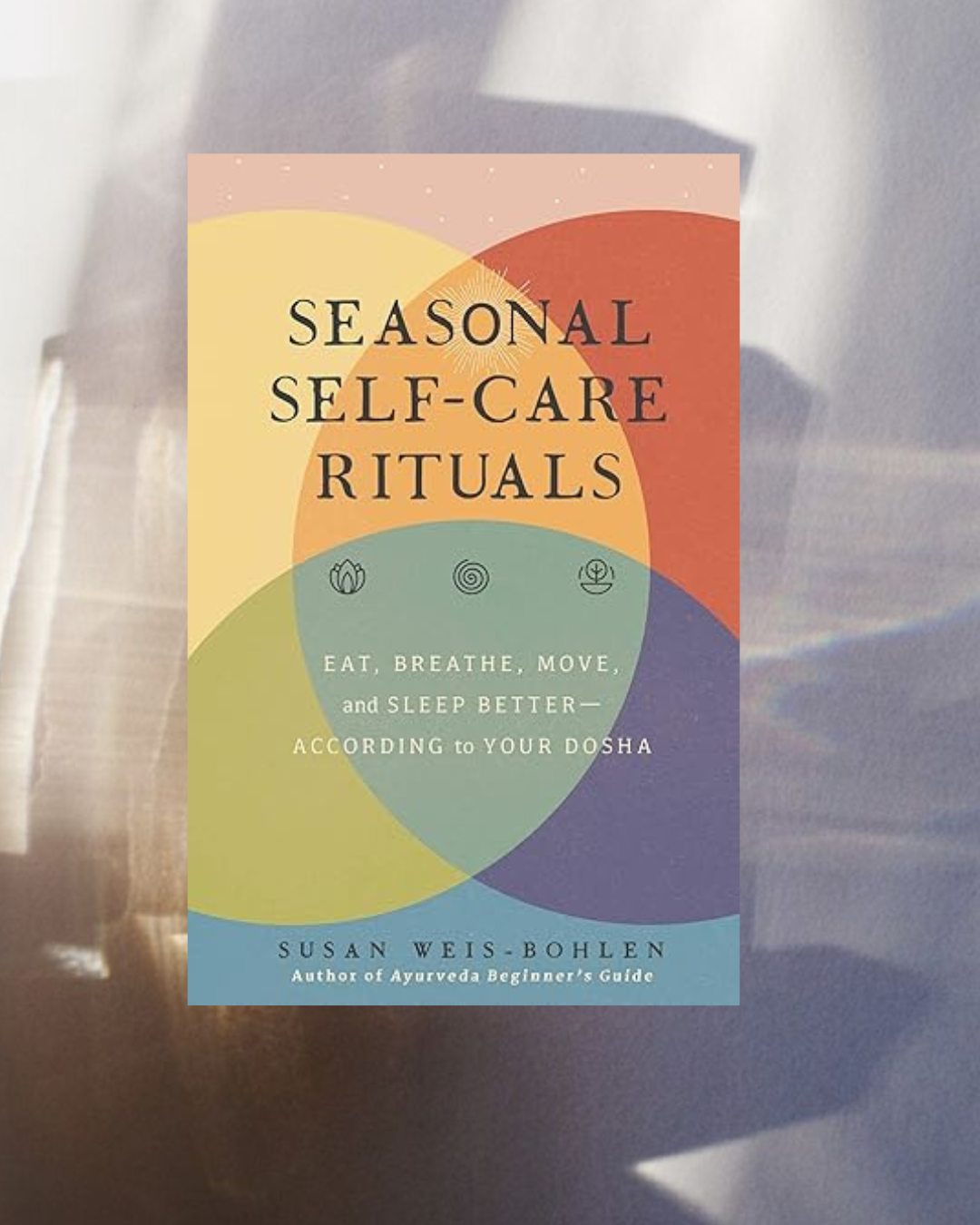
Seasonal Self-Care Rituals
Support your journey of wellness by deepening your practice of learning more about Ayurveda and developing self-care rituals according to your dosha.

Inner Now
To explore Ayurvedic living more deeply and learn how to support balance for your unique dosha, you may enjoy Deepak Chopra’s meditation app, Inner Now. The app offers a simple dosha quiz and then recommends meditation practices and content tailored to your constitution, making it an accessible way to bring Ayurveda into daily life.